Many people try to lose weight quickly, especially before festive seasons such as Chinese New Year. One common approach is skipping meals in the belief that eating less will automatically lead to weight loss. However, scientific evidence shows that this practice may harm metabolism and overall health rather than support sustainable weight management! 
Healthy weight management is not about eating less, but eating smarter! Consistent, balanced meals combined with an active lifestyle are the key to long-term health and sustainable weight control 

What Happens When You Skip Meals
Skipping meals affects the body’s normal physiological processes:
● Blood glucose levels drop, causing fatigue, dizziness, and poor concentration
● Metabolism slows down as the body attempts to conserve energytration
● Hunger hormones increase, leading to stronger cravings later in the day
● Risk of overeating increases, especially high-calorie, low-nutrient foods
Over time, these effects can make weight control more difficult.

Why Skipping Meals Does Not Support Weight Loss
Although meal skipping may reduce calorie intake temporarily, it often leads to negative long-term outcomes:
● Increased fat storage due to slowed metabolism
● Loss of muscle mass, which reduces energy expenditure
● Disrupted insulin response and blood sugar control
● Higher likelihood of binge eating
Studies show that individuals who eat regular, balanced meals tend to have better appetite control and healthier body weight。

Nutrition Strategies That Support Healthy Weight Management
Instead of skipping meals, evidence- based nutrition focuses on balance and consistency:
1. Protein-Rich Foods – Soys, eggs, fish, tofu, legumes
Help control appetite and preserve muscle mass
2. Complex Carbohydrates – Brown rice, oats, whole grains Provide sustained energy and stabilize blood sugar levels
3. Dietary Fiber – Vegetables, fruits, beans, lentils
Promotes fullness and supports digestive health
4. Healthy Fats – Avocado, olive oil, nuts, seeds Support hormone regulation and satiety

Healthy weight management is not about eating less, but eating smarter. Skipping meals is a nutrition myth that can disrupt metabolism and lead to unhealthy eating patterns.
Consistent, balanced meals combined with an active lifestyle are the key to long-term health and sustainable weight control.

Why a Healthy Weight Matters
Maintaining a healthy weight helps lower uric acid levels, prevents fatty liver disease, and reduces the risk of diabetes. Small, consistent lifestyle changes can protect your long-term health in big ways.
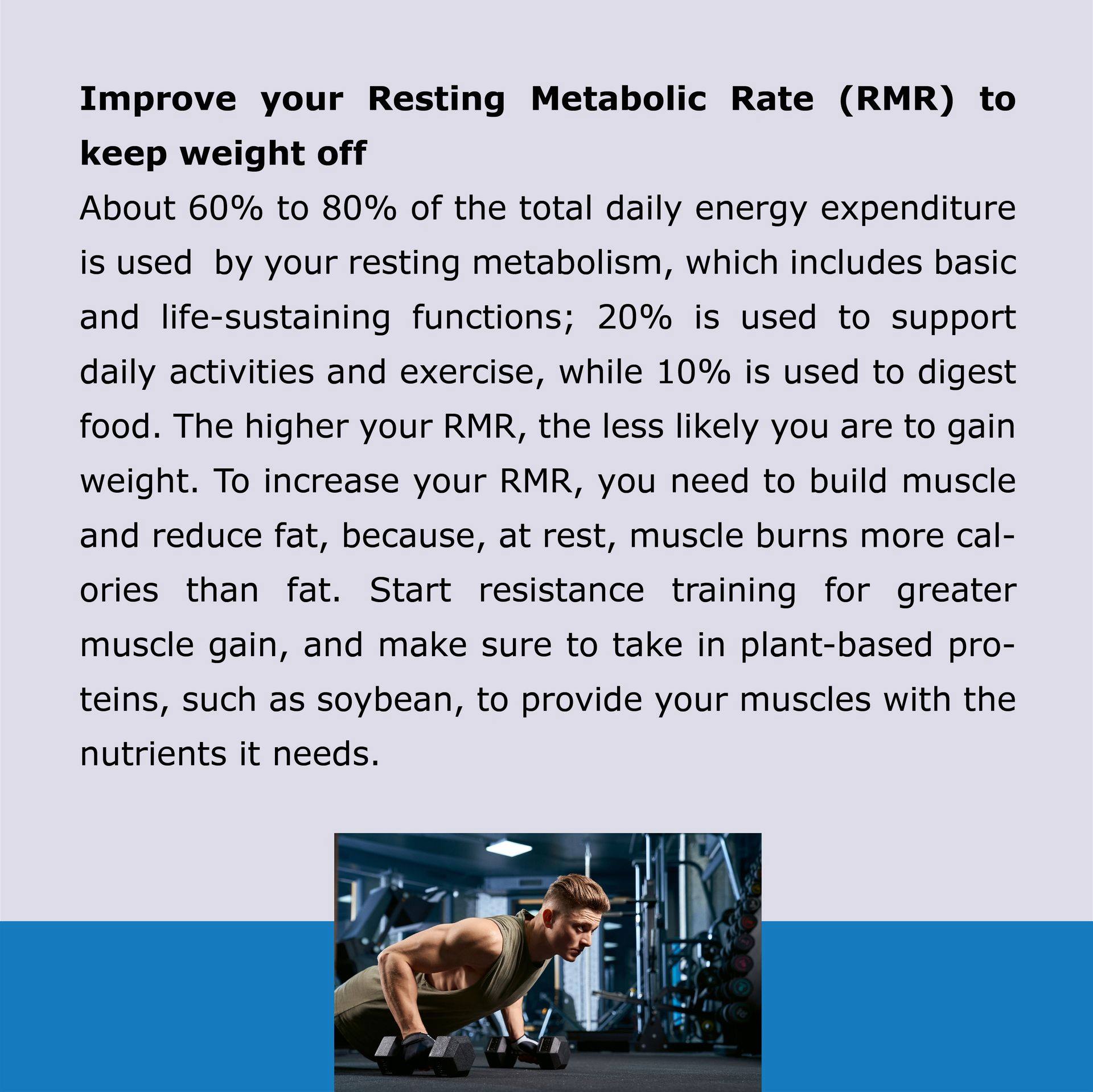
Improve your Resting Metabolic Rate (RMR) to keep weight off
About 60% to 80% of the total daily energy expenditure is used by your resting metabolism, which includes basic and life-sustaining functions; 20% is used to support daily activities and exercise, while 10% is used to digest food. The higher your RMR, the less likely you are to gain weight. To increase your RMR, you need to build muscle and reduce fat, because, at rest, muscle burns more cal- ories than fat.
Start resistance training for greater muscle gain, and make sure to take in plant-based pro- teins, such as soybean, to provide your muscles with the nutrients it needs.

Healthtalk (FiberTalk) 9 – Why does your body need Fiber?
FiberTalk is a fiber-rich powdered beverage made from psyllium husk, banana, and orange to effectively regulate bowel movements, improve skin health, regulate cholesterol levels, manage blood sugar levels, and promote healthy weight management.
Fiber also enhances our digestion system, providing a fluid and smoother passage of food.
Contact Us